
IMPLANTS
(SINGLE, BRIDGE, DENTURE)
The following narrative provides an overview of dental implants, detailing the process, and offering guidance on proper care.
What Are Dental Implants?
Historically, treatment options for missing teeth were limited to bridges and dentures. Today, dental implants have become a prevalent solution. Their natural look, feel, and function have established dental implants as a leading standard in tooth restoration.
A dental implant constitutes a titanium metal sleeve and an abutment with crowns, fixed dental bridges, or partial/complete dentures on top.
In dental implant procedures, the dental surgeon drills a hole into the jawbone for the placement of the titanium screw. This is what provides stable support for one artificial tooth on top.
It anchors into the jawbone through a process known as osseointegration, in which bone tissue grows around the implant.
This bone fusion process can take 3-6 months. After determining that the implant is secure in the jawbone, the dentist places the abutment and a dental crown on top.
Components of a Dental Implant
Dental implants generally consist of three primary parts:
- Implant: A screw-like device functioning as the tooth root, permanently anchored in the jaw.
- Abutment: A connector that supports and secures the prosthetic tooth or teeth.
- Crown (Prosthetic Tooth): The visible part, typically made from zirconium or porcelain for strength and aesthetics.
The Dental Implant Procedure
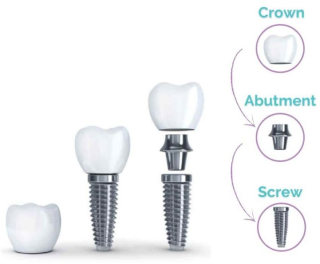
Treatment begins with a customized plan developed by specialists in oral surgery and restorative dentistry, accounting for patient health, medication interactions affecting osseointegration, oral tissue condition, and anticipated functional load. After evaluation and patient consent, the site is prepared and the implant is placed. If necessary, extractions can often be performed during the same visit.
Depending on the clinical approach, the implant may be covered with a healing cap or left exposed. A healing period of approximately six months is required for integration, though bone grafting may extend this timeframe if additional support is needed.
After healing, the abutment is attached, followed by placement of the custom-crafted crown. This step requires two appointments to allow for laboratory fabrication. Dental implants can replace individual teeth, several teeth, or an entire upper and/or lower arch. For full-arch restoration, implant-supported dentures may be indicated.
Advantages of Dental Implants Over Traditional Dentures
Dental implants closely mimic natural teeth in appearance and function. Their fusion with the jawbone ensures stability and permanence, offering improved appearance, speech, oral health, and self-confidence. Implants are highly durable; with proper maintenance, many last a lifetime.
Maintenance of Dental Implants
Implants require the same care as natural teeth: consistent brushing, flossing, use of antibacterial mouthwash, and yearly professional cleaning..
Managing Implant Component Failure
Although rare, components such as healing caps or cover screws may dislodge and are often mistaken for the implant itself. Replacement is generally straightforward. Loss of abutments or crowns should be managed by your implant dentist, who will assess for damage and determine corrective action. For best results, provide a photograph of any dislodged component to your dental office.
In infrequent instances, the implant screw may fail due to infection, trauma, material fatigue, excessive force, loss of supporting tissues, or poor osseointegration. Immediate dental assessment is essential, including radiography to identify causative factors. Depending on findings, replacement options may include additional bone or soft tissue grafts, a fixed bridge, or a removable denture. Treatment decisions should be made collaboratively with your implant dentist.
Implant-Supported Dentures
An implant-supported denture replaces multiple teeth and attaches directly to the jaw via implants, providing superior stability compared to traditional dentures. Both fixed and removable designs are available, with selection based on jawbone health, medical history, and personal preference. Clinical teams will explain procedural steps and expected outcomes.
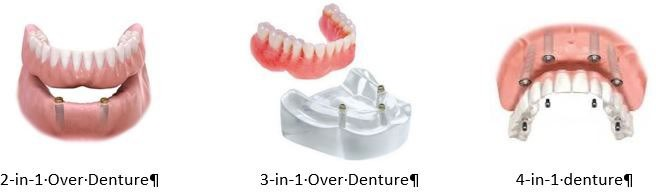
Common Implant-Supported Denture Options
Before implant placement, decayed or damaged teeth are extracted, and bone grafting may be required if significant resorption has occurred, extending the treatment timeline. Implants are
then surgically inserted, requiring approximately six months for integration. Temporary dentures are provided during healing. Upon completion, impressions are taken, and a custom-fitted denture is fabricated and affixed. Most patients select the 4-in-1 (all-on-4) option to preserve palatal sensation. Differences among options will be reviewed during consultation.
Continuing Implant Treatment From Another Clinic
If starting implant therapy elsewhere and seeking completion at Amazing Dental Care, please provide:
- Status of implant and abutment placement; if both are present, treatment may be completed in two days.
- If not, an abutment may need to be ordered, potentially requiring 2–3 weeks depending on availability. Supply manufacturer’s name, dimensions, and tooth number where applicable.
Pain Management for Dental Implants
Most recipients describe minimal discomfort during the procedure. Local anesthesia is typically sufficient, and post-operative pain is usually less than that experienced with extraction, manageable with non-prescription analgesics.
Post-Operative Aftercare
- Diet: Avoid pressure on the surgical site; consume soft, nutritious foods for two weeks and refrain from hard or sticky items.
- Oral Habits: Do not disturb the implant area with the tongue or foreign objects.
- Medication: Take all prescribed antibiotics and analgesics as directed. Contact the clinic if adverse drug reactions occur.
- Oral Hygiene: Avoid brushing the treated area initially; after one week, begin rinsing with medicated mouthwash twice daily.
- Physical Activity: Limit strenuous activity to prevent postoperative bleeding.
- Substances: Refrain from alcohol for two weeks and from smoking for three days pre- and two weeks post-operatively to enhance healing.
- Temperature & Texture: Avoid extremely hot, spicy, acidic, or hard foods.
- Other Precautions: Apply cold packs externally for the first three days to reduce swelling.
- Denture Wearers: Modified dentures will be fitted to avoid pressure on the implants and should not be removed until advised.
For any uncertainties or complications, promptly consult your dental professional to ensure optimal outcomes.
Services
Amazing Dental Care
(Dr. Leb) License #2964294

Our Awards